
How it works
The mill supplies the residue. AVENTRA takes care of the rest.
Our model was designed so the mill can capture value from vinasse without diverting capital and attention from its core business: sugar, ethanol and energy.
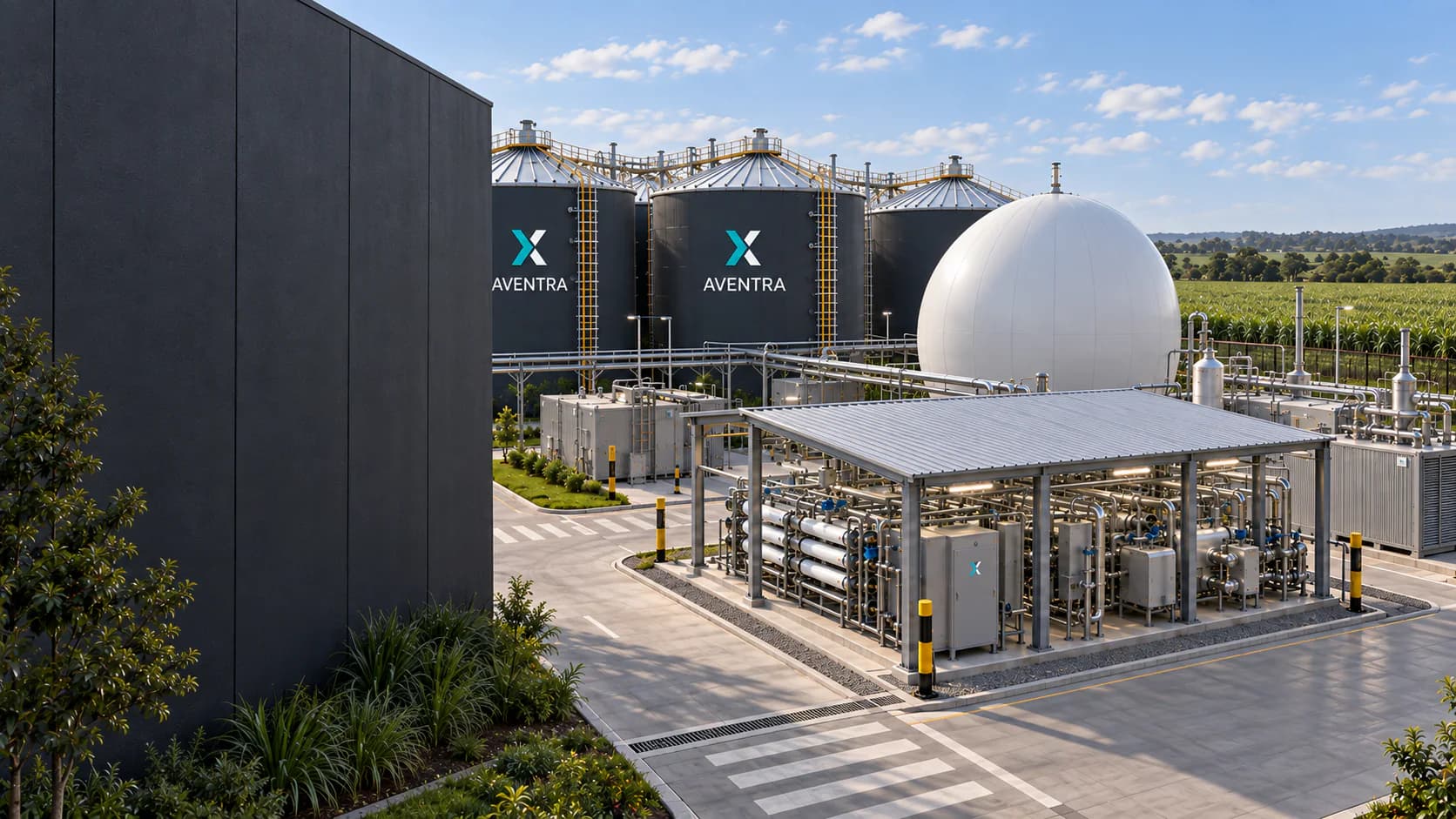
Computer-generated illustration.
The journey
From assessment to operation
01
Assessment
We analyse vinasse and filter cake volumes and characteristics, harvest planning and mill infrastructure. We assess demand and biomethane delivery options within the project’s service area.
→ Production and revenue potential
02
Business model
AVENTRA invests, builds and operates the plant, with no investment from the mill. The mill is paid for supplying vinasse and filter cake, shares in the returns, or both, according to the agreed structure. At the end of the contract, the plant is transferred to the mill. Responsibilities for land, utilities and interfaces are defined commercially.
→ Commercial proposal
03
Development and permitting
We develop the conceptual engineering, obtain environmental permits and authorisations, and finalise the financing structure and gas and co-product sales contracts. This brings the project to the final investment decision (FID).
→ Final investment decision
04
Engineering and construction
We carry out basic engineering, systems integration, and plant construction and commissioning. The design combines closed high-performance vertical bioreactors, automation and process control.
→ Commissioned plant
05
Long-term operation
During the operating stage, AVENTRA will operate the plant 24/7, with a local team and shared specialists, and manage sales contracts and delivery logistics for biomethane and CO₂.
→ Biomethane · CO₂ · Biofertiliser
What the mill gains
Value proposition for the mill
Additional revenue
Payment for vinasse and filter cake, a share in the plant’s returns, or both.
Agricultural use
Biodigestion reduces organic load and preserves nutrients, including potassium, in digestate. Its agricultural use and effects on odour will be assessed according to substrates, process and management conditions.
Decarbonisation
Reduced methane emissions and the potential to generate CBIOs, subject to the applicable certification and issuance requirements.
Complete solution
Development, financing, construction and operation with a single party accountable for results.
What happens once operation begins?
AVENTRA will be responsible for operation throughout the contract. The model provides for centralised supervision, shared maintenance and a local team to monitor operating performance.
For the mill, this means stable production, monitoring of results and an operator accountable for long-term operation.
Shall we assess your mill’s potential?
AVENTRA provides your assessment at no cost.