
Technology
Vertical bioreactors. Process control. Industrial performance.
AVENTRA VECTOR™ integrates biodigestion, gas treatment and automation to produce biomethane efficiently, reliably and competitively throughout operation.
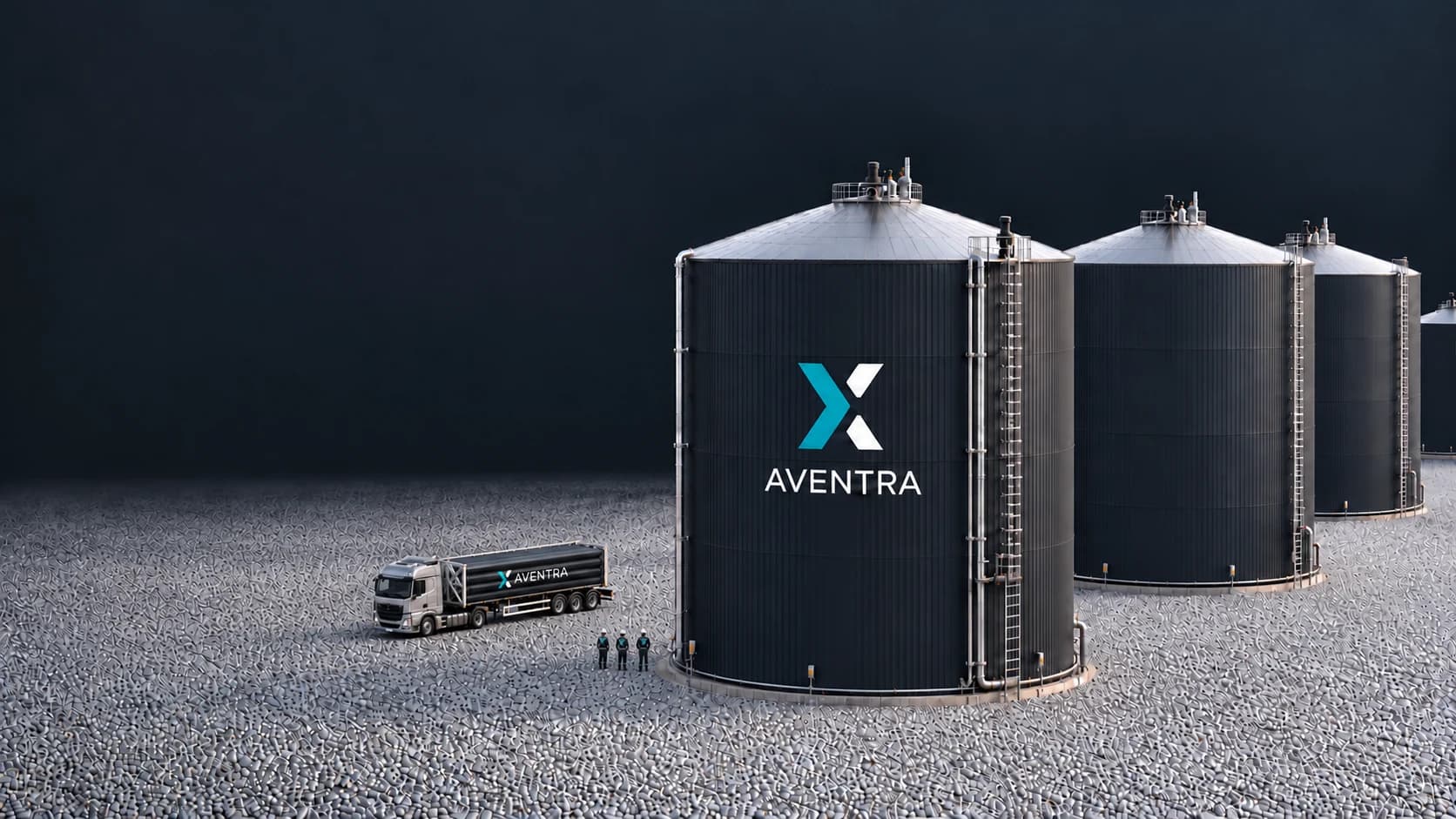
Computer-generated illustration.
AVENTRA VECTOR™
AVENTRA VECTOR™ is our integrated biomethane technology platform. It combines high-load vertical bioreactors, a proprietary feeding system for vinasse and filter cake, and a native digital control and data management system.
Designed for deployment across multiple projects, the platform aims to improve operational performance and reduce operating costs.
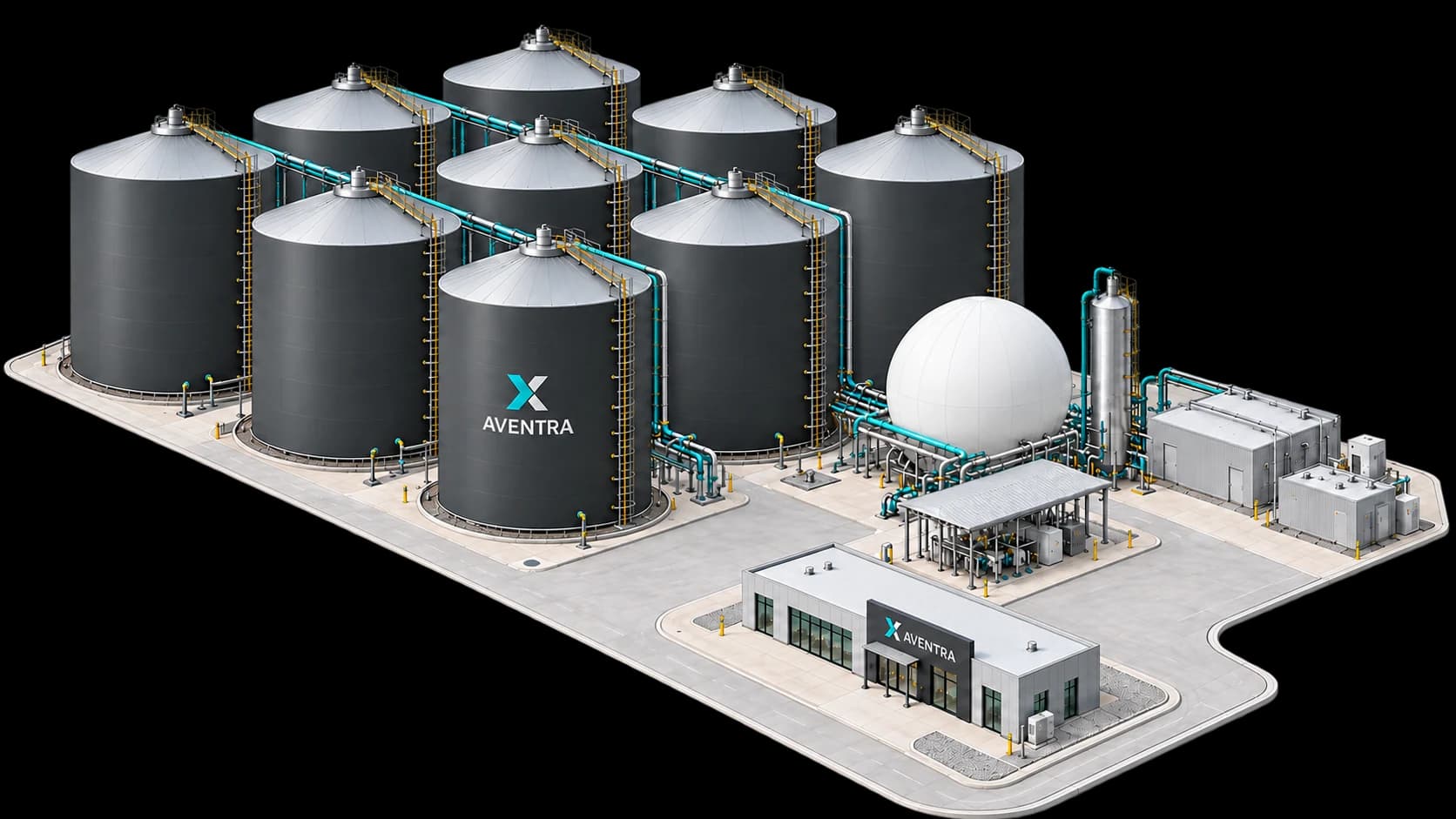
Illustrative computer-generated image.
Biodigestion
High-performance vertical bioreactors
Covered lagoons dominated the first generation of vinasse biogas projects. They are a low-cost solution, but difficult to control — temperature, mixing and retention time vary, and production varies with them. AVENTRA VECTOR™ specifies closed vertical bioreactors with proven technology, controlled biodigestion conditions and management of biomass and solids.
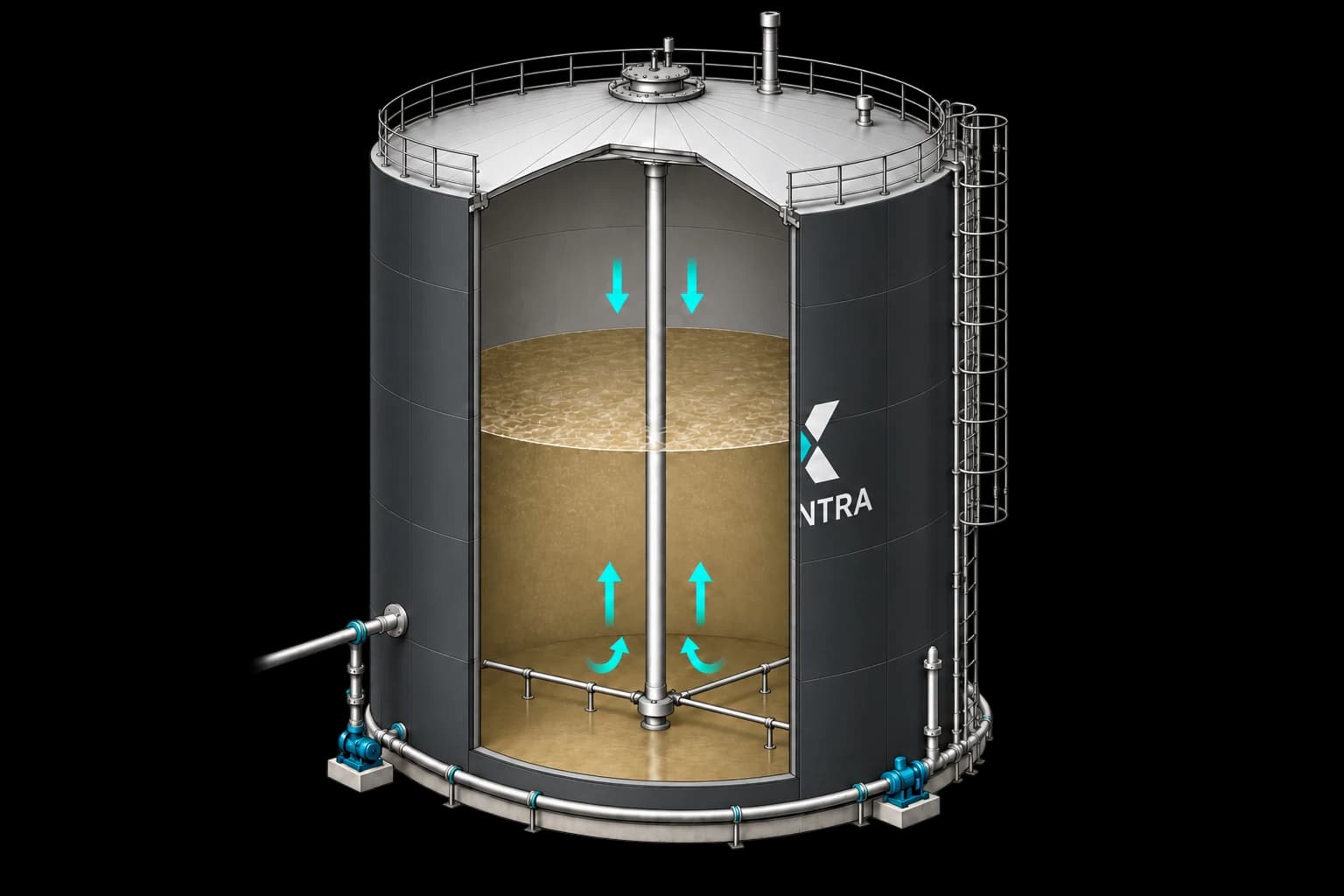
Computer-generated illustration.
Productivity in a compact configuration
Bioreactors handle high organic loads per unit of reactor volume. The result is more biogas per cubic metre of vinasse, within a smaller footprint.
Process stability
Temperature, pH, alkalinity and organic load are continuously measured and adjusted, reducing fluctuations and downtime and supporting gas production within specification.
Availability and emissions control
Closed high-performance bioreactors to reduce fugitive methane emissions, with continuous solids removal to maintain performance and availability.
Process chain
What happens inside the plant
01
Reception and conditioning
Substrates are received, equalised and conditioned to feed the bioreactors at a stable load.
02
Anaerobic digestion
Microorganisms convert organic matter into biogas. Laboratory analyses monitor the biology and process adjustments.
03
H₂S removal
Biogas desulphurisation protects equipment and is necessary to meet the biomethane specification.
04
Biogas upgrading
CO₂ is separated from biogas to increase methane content. The upgrading technology is selected according to gas characteristics and project requirements, to meet the applicable ANP specification.
→ Biomethane
05
Biogenic CO₂ capture
CO₂ can be recovered, purified and liquefied for direct sale, use as a feedstock for synthetic fuels (e-fuels), or geological storage, depending on the project.
→ Biogenic CO₂
06
Agricultural use
Digestate contains nutrients that can be used in biofertilisation. Its agricultural value, pH, organic load and odour depend on the residues and process conditions. Analyses guide its management and field application.
→ Biofertiliser
Digitalisation
One digital platform for all plants
The operating architecture provides for an Operations Control Centre integrated with local teams and process specialists. The planned digital platform will bring together production, quality and maintenance data to support decisions and carry lessons from the first project into subsequent ones. The model also provides for mill and gas customer access to production and delivery information.
Real-time monitoring
Integrated process data and alarms will support the identification of deviations and the operational response.
Continuous optimisation
Operating data will feed models that support adjustments to load, temperature and operating conditions.
Shared teams
The model provides for shared process, maintenance and laboratory specialists, with 24/7 operational coverage and implementation as projects advance.
Find the right configuration for your mill.
We assess vinasse, filter cake, infrastructure and biomethane sales options to propose a solution integrated with your operation.