
Digital architecture
From plant data to operating decisions.
AVENTRA is developing its first biomethane plant. The Operations Control Centre (OCC), integrated digital platform and mill or customer portals described on this page are part of the operating model under development—they are not live production services today.
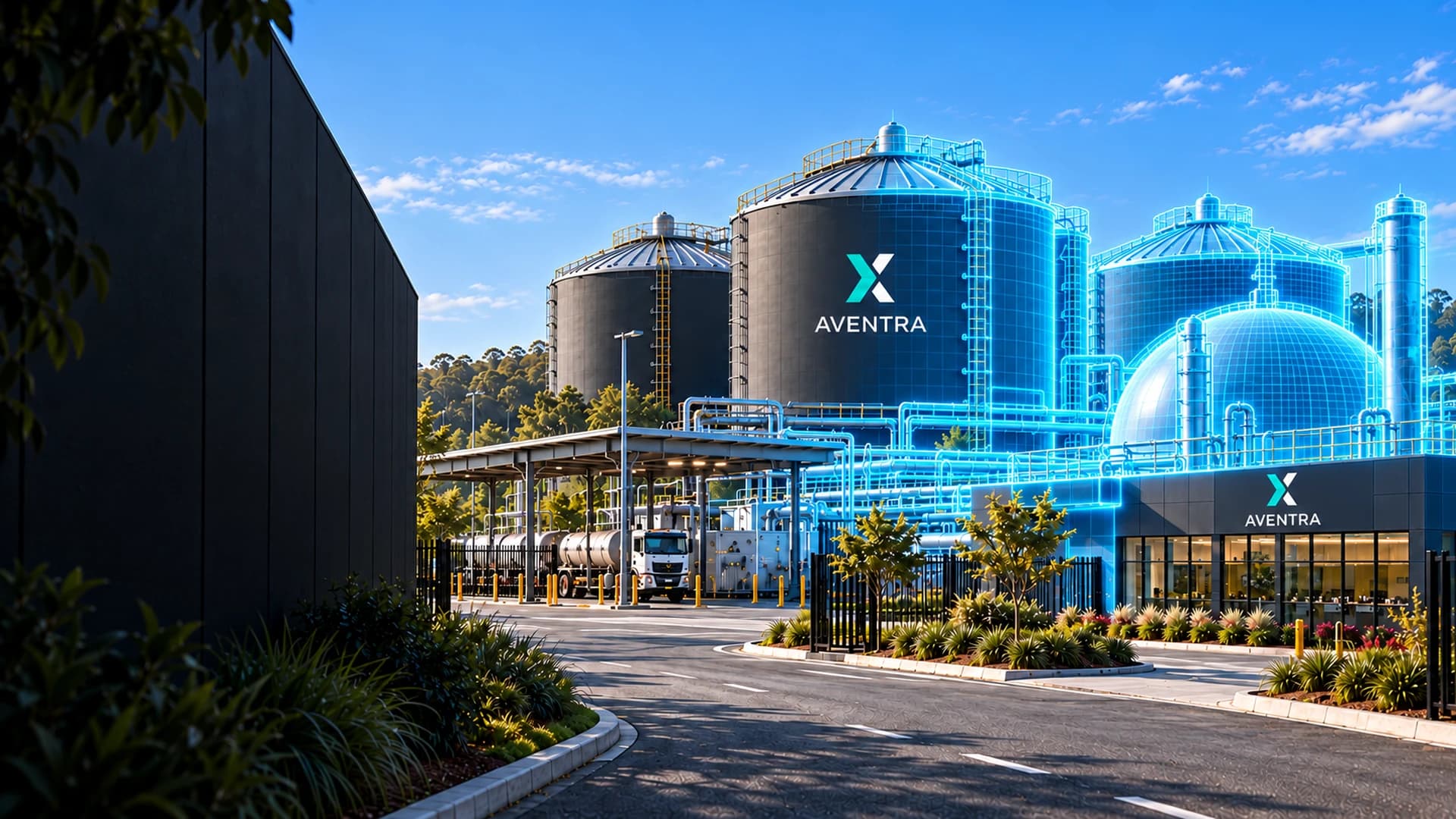
Computer-generated illustration.
What this page covers
This one-page overview explains how digital architecture is designed to work across AVENTRA projects: what is collected at the plant, how information flows to specialists, and what interfaces are planned for mills and gas customers. Each project is conceived with digital-native architecture—data models, integration and supervision planned together with the physical plant, not added as an afterthought. It complements the Technology page, which describes AVENTRA VECTOR™ process equipment. Current status (October 2026): engineering and software for the operating architecture are being defined with the first project. Capabilities below are planned unless explicitly noted as available in development environments.
Architecture
How information is designed to flow
The model connects on-site automation and laboratory data with central supervision and analytics. Built on a digital-native architecture, the same design thread runs from field instruments through integration to the planned OCC and analytics. Implementation details will vary by project, but the layers remain consistent.
01
Plant systems and instrumentation
Distributed control, field instruments, laboratory analyses and maintenance records at the plant provide the operational baseline. Data are time-stamped and attributed to units and batches as defined in the project design.
→ Site data layer
02
Secure integration
Operational technology data are integrated through defined interfaces, with access control and network segmentation between plant systems and AVENTRA’s supervisory environment. The approach follows project cybersecurity requirements.
→ OT / IT boundary
03
Operations Control Centre (OCC)
**Planned:** a central Operations Control Centre will support 24/7 supervision together with on-site teams. Alarms, trends and operating procedures will be available to authorised specialists; coverage scales as projects reach operation.
→ OCC (planned)
04
Analytics and optimisation
**Planned:** production, quality and maintenance data will feed models that support load adjustments, deviation analysis and predictive maintenance. Lessons from the first plant are intended to inform subsequent projects in the portfolio.
→ Analytics (roadmap)
05
Mill and customer interfaces
**Planned:** secure portals or reports for the mill and for gas customers will show agreed production and delivery information—subject to commercial terms and privacy rules for each contract.
→ Stakeholder access (planned)
Capabilities
What the digital layer is meant to deliver
These outcomes depend on the first plant reaching operation and on phased rollout of software and procedures.
Operational visibility
Integrated process views and alarms to support timely response—planned with OCC and site teams working from the same information.
Performance and quality
Tracking production, upgrading performance and co-product quality against specifications, with laboratory and online measurements combined where available.
Shared expertise
Process, maintenance and laboratory specialists supporting multiple assets, as described on Technology and How it works, with digital tools as the coordination layer.
Portfolio learning
Standardised data models so improvements validated on one project can be applied to the next—without compromising site-specific engineering.
AVENTRA VECTOR™
AVENTRA VECTOR™ combines bioreactors, upgrading, native process control and digital-native architecture. Supervision, data models and integration are part of how the platform is defined from development—not a separate layer bolted on after mechanical design. This digital architecture model does not replace engineering judgement or safety systems at the plant. Control loops and safety instrumented functions remain on site; the planned OCC and analytics add coordination and continuous improvement across the contract life cycle. For equipment and process detail, see Technology. For the commercial model with mills, see How it works.
Discuss digital requirements for your project.
Tell us how your mill or offtake operation uses data today. We can walk through the planned architecture and interfaces in a technical conversation.